

Menopause & hydration
Practical hydration tips for perimenopause and menopause.
About this topic
Menopause & hydration
Menopause brings lots of changes, and staying hydrated is one of the simple everyday habits that can help you feel your best. Our menopause guides focus on practical hydration, not treatment.
We look at common questions about menopause and perimenopause bloating, menopause and perimenopause tiredness and fatigue, night sweats and magnesium for menopause and perimenopause. If you're losing more fluid through night sweats, for example, it makes sense to keep a drink by the bed and top up through the day.
Always speak to your GP or pharmacist about menopause symptoms. Our guides are general information and not medical advice.
New articles are on the way
We're working on our first menopause articles. In the meantime, there's plenty more to read on the Vidrate blog.
Browse all articlesShop the topic
Easy everyday hydration


FAQs
Menopause & hydration FAQs
Why does hydration matter during menopause?
Hydration is important at every stage of life. During menopause, night sweats can mean you lose more fluid than usual, so it helps to top up through the day and night.
Can drinking more water help with bloating?
Staying hydrated supports normal digestion, but bloating has many causes. Speak to your GP if it's persistent.
Can dehydration make you feel tired during menopause?
Not drinking enough can leave anyone feeling tired and less alert. Tiredness during menopause and perimenopause has many causes, so speak to your GP if it's affecting your day.
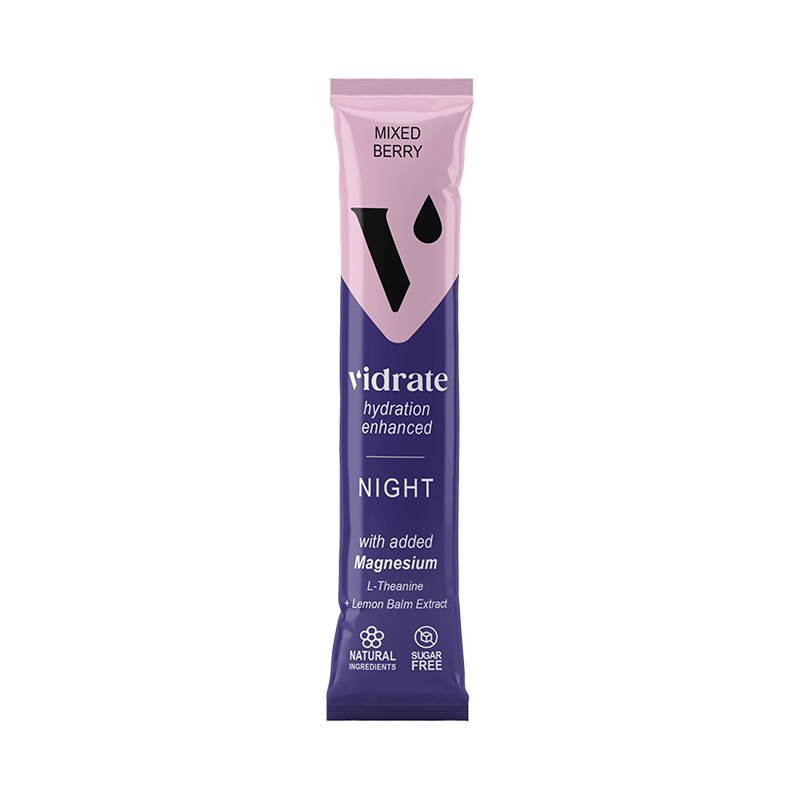
Is magnesium good for menopause?
Magnesium contributes to the reduction of tiredness and fatigue and to normal psychological function. It isn't a treatment for menopause symptoms, so speak to your GP or pharmacist for advice.
Should I drink water at night if I have night sweats?
Keeping water by the bed means you can replace fluid if you wake up hot. Speak to your GP if night sweats are affecting your sleep.